
Owning property in Dubai is a dream for many global investors and overseas buyers. However, securing a mortgage as a non-resident involves unique rules, requirements, and opportunities.
This guide will walk you through everything you need to know, from eligibility and documentation to costs, borrowing limits, timelines and tips to improve your chances of approval.
You could be considering your first investment in Dubai or expanding your global portfolio, or even simply curious, let this assist you in understanding the process from start to finish.
Can non-residents get a mortgage in Dubai?
Yes. Foreign buyers who do not live or work in the UAE can secure a mortgage in Dubai, provided they meet specific lender criteria and provide full documentation. Non-resident mortgages are widely offered by local and international banks, though they generally come with stricter conditions than for residents.
Key Differences- Non-resident Vs Resident Mortgages
Non-residents face slightly different conditions compared to UAE residents:
- Higher down payments-Non-residents often need 35–40% or more as a deposit vs residents who can sometimes secure lower.
- Lower Loan-to-Value (also known as LTV)-Banks may finance only a smaller percentage of the property value.
- Stricter documentation– More comprehensive proof of income and credit history is required.
- Interest rates can be higher-Non-resident borrowers typically face slightly higher pricing than residents due to risk perceptions.
These differences reflect banks’ risk management practices and Central Bank guidelines.
Loan-to-Value and Down Payment Expectations
It indicates how much a bank will finance relative to the property’s value. For non-residents:
- Ready freehold properties- up to ~60–70% LTV (which is 30–40% down payment).
- Off-plan properties- generally lower LTV (often 50–60%) and higher cash requirements.
- Second or investment properties- lenders typically lower LTV further (around 60% or less).
In practice, many lenders will expect you to come with 35% – 40% upfront payment of the property price before they finance the rest.
Mortgage Interest Rates and terms for Non-Residents
Interest rates tend to vary by lender, borrower profile, as well as market conditions, but for non-residents in Dubai, typical rates are around the 4% – 6.5% range as of 2026, depending on your credit profile and the size of down payment.
Most mortgage terms range up to 25 years for ready properties, though some banks may shorten terms for non-residents or for older applicants.
Eligibility Criteria
While each bank has its own policies, non-resident mortgage criteria generally include-
Proof of Identity and Status
- Valid passport from an approved country
- Visa documentation (if applicable)
- Utility bill or proof of residential address in home country
Income and Financial Stability
- Salaried applicants must show consistent salary and employment details
- Self-employed applicants may need trade licenses, financial statements and tax returns
- Monthly income thresholds often start at around AED 25,000–40,000 depending on bank and borrower profile
Bank Statements and Credit History
- 3–6 months of personal bank statements
- Credit report from your home country , it is important for risk assessment
Debt-to-Income Ratio
Banks often limit your monthly debt payments (including the mortgage) to no more than ~50% of your income, ensuring affordability.
Approved Property Criteria
Non-resident mortgages are usually available for freehold properties in designated areas. Banks may also limit financing to buildings or communities on their approved lists.
Required documentation checklist
Non-residents typically need:
- Passport copy
- Proof of income (salary slips, employment letters, or business related financials)
- Bank statements (last 3 -6 months)
- Credit report from home country
- Proof of residence (foreign utility bill or lease contract)
- Property sale agreement or purchase contract
Having complete documentation upfront significantly speeds up approval.
When you go to a single bank, you see one answer.
When you go to Nestwood Mortgage, you see the entire UAE lending market.
Costs Beyond the down payment
Buying in Dubai incurs additional costs you should budget for:
- Dubai Land Department or DLD registration fee, which is usually 4% of property value
- Mortgage registration- About 0.25% of loan amount plus admin fees
- Valuation and processing fees
- Insurance costs like life and property insurance may be required by the bank
- Agent commissions, typically around 2% of the property value
These costs are separate from the mortgage and must typically be paid upfront.
Process of Application
How Nestwood Mortgage secures better mortgage outcomes for non-residents
Nestwood Mortgage is not tied to any one lender. We work with a wide panel of UAE banks and international financial institutions, allowing us to scan the market and place your application where it has the highest chance of approval and the lowest total cost.
Here’s what that means in practice:
Non-resident applications fail most often because they are sent to the wrong lender. At Nestwood, we assess:
- Your nationality
- Your income structure
- Your residency status
- Your property type
- Your investment goals
We then submit your file only to banks that are actively approving profiles like yours, saving weeks of rejection cycles.
We negotiate rates, not just accept them
Banks publish “card rates”, but these are rarely what you end up paying.
Because Nestwood Mortgage delivers volume to UAE lenders, we are able to negotiate preferential pricing, reduced fees, and lender incentives that are not available to walk-in clients.
For non-residents, this can mean-
Lower interest margins, Higher loan-to-value, Reduced processing or valuation fees
We protect your profile across multiple banks
When you apply directly to several banks, each inquiry leaves a trail, and too many applications can weaken your profile. Nestwood submits your case in a controlled, strategic way, protecting your credit reputation while comparing lenders behind the scenes.
We manage the whole process from abroad
Non-resident buyers often face delays because banks request documents, clarifications, and re-submissions. Nestwood Mortgage handles-
- Underwriter queries
- Valuation coordination
- Bank follow-ups
- Legal and compliance alignment
So you don’t need to be on multiple time zones chasing approvals.
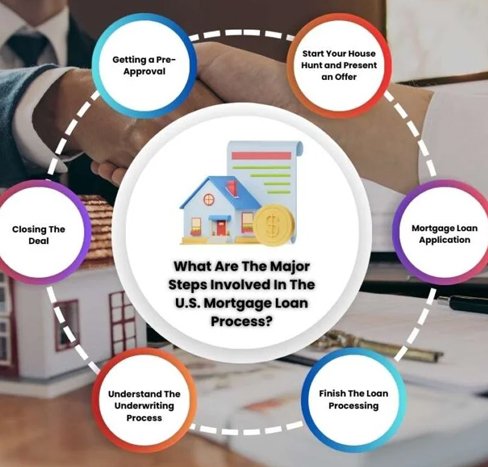
Pre-qualification / Pre-approval
Most lenders issue a pre-approval indicating how much you can borrow. This helps you plan your purchase and strengthens your offer.
- Property selection and offer
Choose a freehold property and negotiate terms with the seller or developer. - Submit full mortgage application
Provide required docs and financial evidence. - Valuation and underwriting
Appraising the property and reviewing your financials. - Final approval and offer letter
Once approved, the bank issues a final offer letter detailing terms. - Property transfer and mortgage registration
Upon signing final contracts, the property is registered at the Land Department and the mortgage is officially recorded.
Tips for Improving your Chances of Approval
- Use a mortgage broker like Nestwood Mortgage to access multiple lenders and tailored options.
- Organise your documentation and provide complete financial statements upfront.
- Consider a larger down payment to increase your chances of higher LTV and better rates.
- Maintain a strong credit profile in your home country before applying.
- Choose freehold properties in bank-approved areas to avoid rejection due to property restrictions.
Final thoughts
Buying a property in Dubai from abroad is possible, and the city remains one of the most attractive global real estate investment hubs.
Non-resident mortgages are available, with clear eligibility criteria, structured down payments, and defined LTV limits. If you are someone who can plan carefully and work with experienced advisors, you can turn your Dubai property goals into reality without further ado!
And guess what, you don’t need to be physically present in the UAE to secure the right mortgage, but you do need the right partner on the ground.












One Response
test