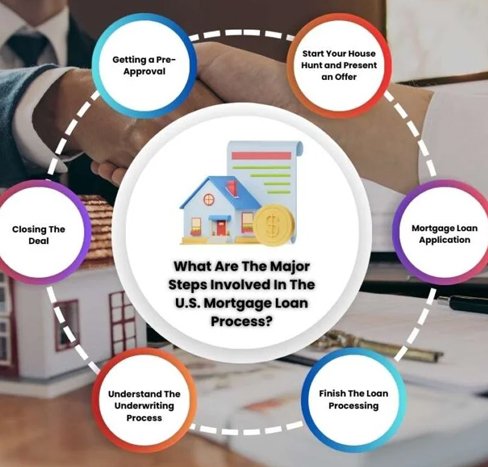
It must be exciting to buy your first home in Dubai, but navigating your first Dubai mortgage can be costly, confusing, and full of surprises unless you have an idea what to look for. Most people have a focus on interest rates and down payments, but that is just the beginning.
Here’s everything you would need to know before signing anything, including truths banks rarely emphasize up front, and how working with specialists like Nestwood Mortgage puts you in a better position from day one.
Deposit is not the only cash you need
Many first-time home buyers have an assumption that the down payment is the only upfront cost. It actually is not.
Under UAE central bank rules, expats typically need a 20% down payment for residential property under AED 5 million, but that is only part of the cash you must bring to the table.
You must also budget for a range of fees which can quickly add another 6-8% of property value.
For instance, on a AED 2 million home, your 20% deposit might be just the beginning, you could need another AED 120,000-160,000 on top of that before you can move in!
Banks don’t tell you that they often don’t finance these costs, which means you must have them in liquid cash, not tied up in investments or overseas accounts.
Loan to Value can be more restrictive than you expect
LTV determines how much of the property price you can borrow. For many expats, the standard is-
- Up to 80% LTV on ready properties
- Higher cash requirements on off-plan or investment properties
That means even if you think you only need 20% upfront, banks may insist on additional cash for mortgage eligibility reasons.
Banks don’t say that LTV is influenced by your income, credit, employment type, and property type, not just the headline rules. A strong profile can sometimes unlock better terms.
Pre-approval is not just a formality
Many buyers start looking at properties before getting pre-approved. That is a common mistake.
Why this matters-
- It clarifies exactly how much you can borrow
- You don’t waste time looking at houses outside your budget
- Sellers take you seriously when you offer with financing in hand
Pre-approval has a validity period(often 60-90 days), and if your property search takes too long, you may need to renew at current rates, potentially higher than when you first applied.
Hidden costs and Budgeting Mistakes kill deals
Your mortgage payment is not just principal and interest. Many buyers overlook-
- Property maintenance fees
- Service charges and community charges
- Insurance costs (life and property)
- Utilities and ongoing payments after handover
Even if the headline mortgage rate seems low, the real cost of ownership is often higher.
Banks frequently showcase monthly repayment figures without showing the entire thing. All of those ongoing costs can dramatically affect your cash flow as well as your approval chances.
The Debt-Burden Ratio is more important than you think
Dubai lenders cap your Debt Burden Ratio at around 50%, meaning your total monthly debt (including the new mortgage) can’t exceed roughly half of your income.
This is a big reason why applicants with similar incomes can get very different loan sizes, one person might qualify for a sizable mortgage, another for much less, all because of personal debt levels or spending patterns.
Banks don’t emphasize how high credit card limits, even with no balance, can count against you in calculations.
Interest Rate Structure Matters
Mortgage products in Dubai typically offer fixed rates (about 3–5 years) or variable rates linked to EIBOR.
- Fixed rates give predictability, ideal for budgeting
- Variable rates can be cheaper initially but fluctuate with markets
Banks won’t always highlight that minimum monthly payments could rise if benchmark rates shift, and early repayment penalties can make refinancing later costly.
Banks don’t always value your property at contract price
The bank will commission an independent valuation. If that valuation is lower than the agreed price, you must cover the gap in cash. This can add hundreds of thousands of dirhams unexpectedly. This is not a rare case, it happens often and can derail deals if the buyer has not planned for it.
Documentation expectations are stricter than elsewhere
A surprising reason applications fail: incomplete or unsupported documents. Banks want verifiable income, employment contracts, consistent bank statements, and sometimes foreign credit history. If any paperwork is missing or unclear, approvals can stretch weeks, or be rejected outright.
Choosing the wrong property can affect your eligibility
Not all buildings qualify for financing. Banks maintain approved property lists for mortgageability, especially important for resale properties. If your chosen development is not on that list, your application could be paused or declined, and you might not know until late in the process.
Going to one bank will limit your options
Here’s the part banks don’t tell you clearly: each lender in the UAE has its own appetite, credit criteria, pricing, and LTV limits. Some lenders are friendly to non-residents, others are strict or conservative. This means:
- The first offer is not necessarily the best
- The ‘lowest rate’ may come with higher fees
- One bank’s rejection may be another bank’s approval
This is where a mortgage broker provides real advantage.
Why Working with Nestwood Mortgage helps
- Instead of walking into a single bank and seeing one answer, we scan the UAE market and match your profile with the right lenders, meaning better chances of approval and better pricing.
- Banks publish headline rates, but Nestwood is able to negotiate margins, fees, and incentives many walk-in applicants don’t get.
- We help you build a realistic homebuying budget, not just a rate, by factoring in mortgage fees, transfer fees, service charges, and valuation gaps before you commit.
- We guide you through exactly what banks want, reducing delays and misunderstandings in the application.
- Even after handover, we assist with refinancing assessments, rate reviews, and future property financing strategies.
Together, this means less stress, fewer surprises, and a much stronger path to success for your first Dubai mortgage.
Final Thoughts
Your first Dubai mortgage is about understanding total cost, eligibility requirements, borrowing capacity, and how your financial situation is evaluated. Planning ahead, shopping the market, and partnering with expert advisors like Nestwood Mortgage makes that journey faster, clearer, and far more successful.